
Business
Women leave Irish workforce earlier than men, report shows
Balance for Better Business (BFBB) has released a report indicating that Irish women aged 50 to 65 are…


Google has confirmed that it will launch a prototype satellite next week as part of Project Suncatcher, a research effort to assess whether its tensor processing units (TPUs) can operate in the harsh environment of space.
The satellite will ride on SpaceX’s Transporter‑18 rideshare mission, developed in partnership with Planet. Its purpose is to collect in‑orbit data on how TPU chips cope with the intense vibrations, acceleration forces of up to 50‑100 g, radiation, and extreme temperature swings experienced during launch and while in low‑Earth orbit.
Google’s senior director for Paradigms of Intelligence, Travis Beals, said the project aims to explore the potential for large‑scale AI computing infrastructure in space, noting that satellites in low Earth orbit can receive up to eight times more solar power than on the ground. He added that the ultimate goal is to link multiple satellite constellations to handle larger AI workloads.
Prior ground testing at UC Davis’s Crocker Nuclear Laboratory showed the Trillium TPUs could survive radiation doses exceeding those expected over a five‑year mission. The upcoming launch will provide the first real‑world validation of those results.
Google recently announced its largest single investment in Europe, pledging €13 billion to Finland’s digital infrastructure over the next two years, including data‑centre expansion and clean‑energy projects.
Source: Silicon Republic. Photo: Pixabay / Pexels.
Balance for Better Business (BFBB) has released a report indicating that Irish women aged 50 to 65 are…

Dermot Goode of Health Insurance Ireland has warned that health insurers are reducing the number of procedures covered…

The Irish Farmers Association (IFA) has described the Vegan Society of Ireland’s proposal for a national plant‑based food…
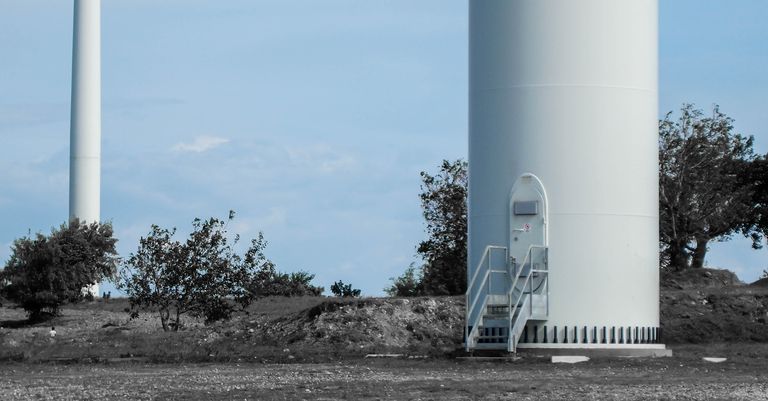
An investigation has been opened following a landslide at the Drumnahough Wind Farm construction site, located 13 km outside…

The Parades Commission in Northern Ireland has granted permission for an Orange Order walk down the Garvaghy Road…

More than 450 people gathered in Ennis on Tuesday as County Clare formally launched its European Volunteering Capital…

Manchester City have been found guilty of virtually all of the financial rule breaches they were charged with…