
National News
Elective surgeries halted as 568 patients use Letterkenny A&E over weekend
All elective surgeries at Letterkenny University Hospital have been postponed today because of severe overcrowding in the Emergency…


University College Dublin (UCD) hydrogeology expert Dr Alan Seltzer has co‑authored a paper outlining a novel method for testing water quality using a rare nitrogen isotopologue.
The study, published in the journal Science, shows that the naturally occurring 15N15N isotopologue acts as a “natural fingerprint” for microbial nitrogen conversion, helping to quantify how microbes remove nitrogen from water—a process previously difficult to measure.
High nitrogen concentrations can trigger algal blooms and aquatic death, so accurate assessment is crucial. Seltzer, an assistant professor specialising in water geochemistry for over a decade, has focused on dissolved noble gases and their isotopes as stable tracers of groundwater and ocean history.
Since joining UCD’s School of Earth Sciences in 2025, Seltzer has secured a European Research Council Starting Grant titled “Tracing Anthropogenic Biogeochemical and Physical Influences on Subsurface Hydrogeology”. The grant supports a new laboratory to develop geochemical tools for tracing groundwater contamination and the natural processes that mitigate it, with field work across six global sites, including south‑eastern Ireland.
Seltzer’s aim is to apply these techniques to better understand how human activities have altered the nitrogen cycle in groundwater, including the production and sources of nitrogen gas from microbial nitrate consumption.
Source: Silicon Republic. Photo: Carlos Garcia / Pexels.
All elective surgeries at Letterkenny University Hospital have been postponed today because of severe overcrowding in the Emergency…

A nurse‑led community oncology service in the Mid West has been recognised nationally after winning an award at…

Rose, a 62‑year‑old woman who asked that her real name not be used, became homeless last week after…

New Delhi’s relationship with President Donald Trump has markedly cooled ahead of the United States midterm elections, analysts…

Instagram has deleted the account of Cork‑based social media personality “Rendy Vlad” after repeated violations of the platform’s bullying…
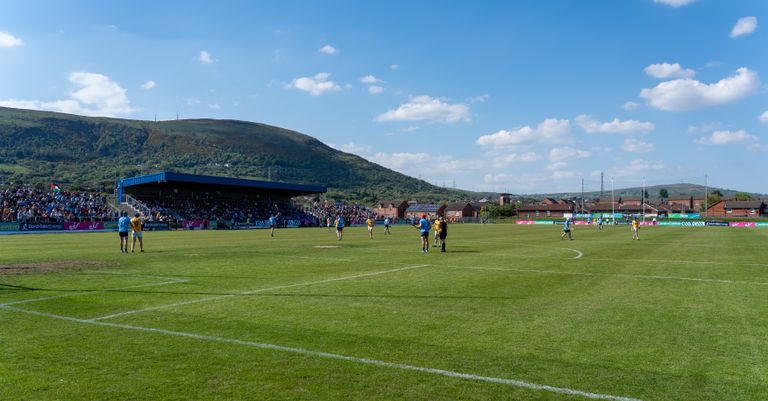
Kilmallock dethroned Na Piarsaigh to win their 13th Limerick Senior Hurling Championship at the Gaelic Grounds over the Bank…
The ESB has cautioned that the European Union’s “Made in Europe” proposal may extend Ireland’s housing crisis. The…