
Crime
Donegal man charged with €7,000 drug haul
A 30‑year‑old man from Donegal Town has been charged with possessing nearly €7,000 worth of drugs for sale…

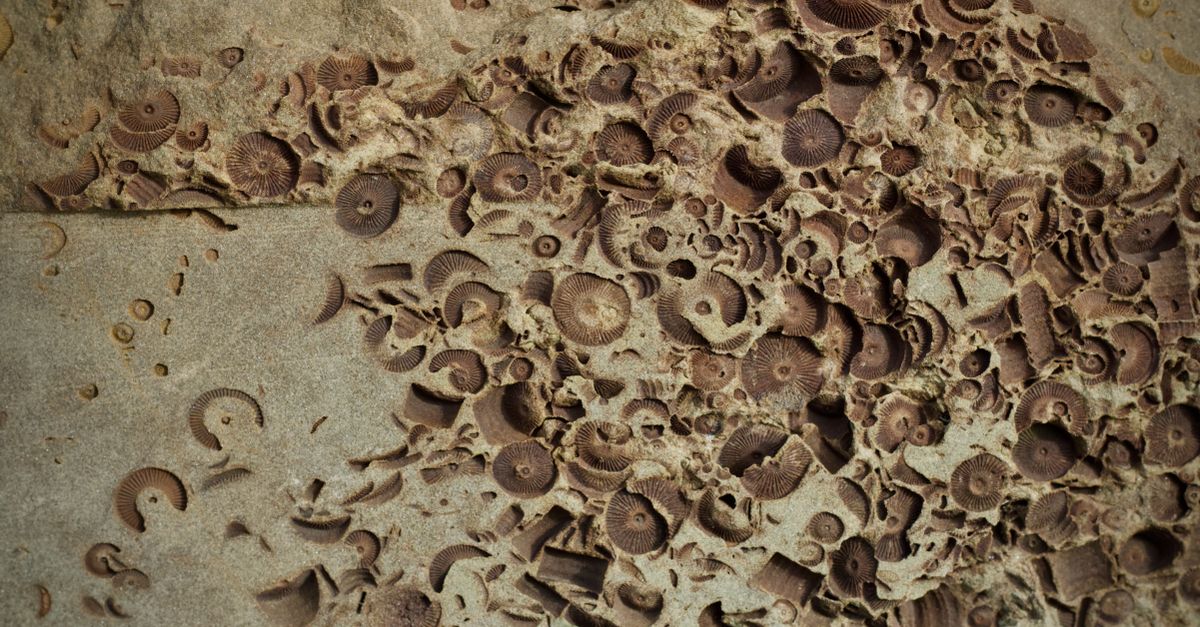
Researchers at University College Cork have shown that melanosomes – microscopic, melanin‑rich structures – are preserved in 300‑million‑year‑old fossil fish, indicating a role in vertebrate evolution.
The team, led by PhD researcher Daniel Cirtina, published their findings in Nature Communications last month. Their analysis suggests that the shape and distribution of melanosomes in fish eyes differ between major groups, with elongated melanosomes in bony fish and spherical ones in sharks, rays and jawless fish.
These patterns were also identified in the ancient fossils, implying that visual adaptations linked to melanosomes date back to the major vertebrate divergences around 445 million years ago.
Cirtina, who holds a bachelor’s in materials science and engineering from Swansea University and a master’s in palaeobiology from the University of Bristol, is completing his PhD at UCC. His work examines how melanin and its cellular organelles have influenced early vertebrate biology, including functions in internal organs.
The study highlights the durability of melanosomes, offering a rare biological window into deep evolutionary history.
Source: Silicon Republic. Photo: Peter Dyllong / Pexels.
A 30‑year‑old man from Donegal Town has been charged with possessing nearly €7,000 worth of drugs for sale…

Letterkenny Tidy Towns will host its 40th Annual Cleaner Community Campaign Awards on Monday 30 November at 7 pm in…

Limerick City and County Council has signed a contract with Martins Construction Ltd to build six new social…

Senator Patricia Stephenson of the Social Democrats has tabled a motion in Seanad Éireann urging the Government to…

President Donald Trump used a Justice Department visit on Monday to condemn California Governor Gavin Newsom’s decision to commute…

Amazon has announced the acquisition of Decart’s AI optimisation technology, its founding team and additional staff, aiming to…

US crypto‑asset trading firm Webot has opened its European headquarters at Penrose Dock in Cork City. The new…